
You Figured Out How to Win Clients. Now the Operations Are Breaking.
This is where most agency founders find themselves at the $1M mark. Client acquisition is working. Revenue is growing. And the backend is starting to crack.
Growth is not the problem. Operations that cannot keep up with growth is the problem.
 Faiz YarKhan
Fractional COO / Integrator
Faiz YarKhan
Fractional COO / Integrator
Every new client that comes in makes every existing problem worse. Growth does not solve these problems. Without a system, growth accelerates them.
Not Sure Where Your Agency Stands Operationally?
Take the Agency Operating System Assessment
Get a clear picture of where your agency's operating system is holding up, and where it isn't, in about ten minutes.
Built for Agency Founders Past the $1M Mark.
Online agency founders doing at least $1M in annual revenue whose operations are starting to break under the weight of growth.
If you run a team-based online agency and your operational problems are compounding as client volume increases, this engagement was built for your situation.
The Problems Are Operational, Not Motivational.
Client onboarding is inconsistent
Pull ten recently closed deals and ask the delivery team what they actually knew before onboarding started. The answer is usually a client name, a retainer amount, and whatever the salesperson mentioned in Slack.
Scope creep is eroding margin silently
It starts as a favor. Nobody tracks it. Six months later the retainer that was supposed to generate 40% margin is generating 15% and nobody knows why.
The founder cannot step back
Every new client brings more relationships, escalations, and decisions that route back to the founder. The business is growing but the founder is becoming more embedded in it.
Quarterly plans fall apart
Priorities get set at the start of the quarter and abandoned by week six because no system exists to protect them when urgent client work fills every available hour.
Every new client makes every existing problem worse
The onboarding problem gets harder because volume increases. Scope creep compounds because there are more accounts to track. Founder dependency deepens because the team needs more direction as the business becomes more complex. Growth does not solve these problems. Without a system, growth accelerates them.
What Gets Installed
The Direction Document
One page. Where the agency is going in one, three, and ten years. The document that gets every leader giving the same answer.
The Accountability Structure
Named owner for every function. Tier-level delivery ownership so urgency cannot silently crowd out the rest of the business without anyone noticing.
The Weekly Scorecard
5 to 15 numbers, each with a named owner. Utilization rate. Per-tier margin. Problems surface the week they happen, not the month after.
The Scope Log
Per-client tracking that triggers a retainer review automatically when hours or deliverables exceed the agreement. No courage required.
The Sales-to-Delivery Handoff
A mandatory written document for every closed deal, countersigned by delivery before onboarding begins. What was promised, at what tier, with what timeline.
The Weekly Rhythm
A 90-minute structured meeting run by an internal owner, not the founder. Issues get closed. Priorities get protected.
The 90-Day Model
1–21Diagnostic
Diagnostic
Ten to fifteen recently closed deals get pulled and reviewed against what the delivery team actually knew. Utilization and margin get reviewed across the active client book. Sales and delivery are interviewed separately. The direction exercise runs with the leadership team.
The output is a written gap analysis. The installation is built around what is actually broken, not what is assumed.
22–60Installation
Installation
Direction and accountability go in first because every other component depends on them. Then the operational systems: handoff, scorecard, scope log. Then the rhythm.
The sequence is deliberate. Each piece depends on what came before it.
61–90Handoff
Handoff and Proof
The internal owner runs the Weekly Rhythm independently. A second diagnostic using the identical methodology as day one produces a written before-and-after comparison.
The proof is not a claim. It is a documented audit showing what the numbers looked like before and what they look like now.
A Weekly Working Session, Not a Once-a-Quarter Check-In.
The engagement runs as a weekly working session with the founder and the current operations lead. Each session covers the week’s priorities, active issues, and where the installation work stands. Between sessions, I am available for questions and decisions that cannot wait.
The engagement runs primarily remote with on-site visits built in as the work requires.
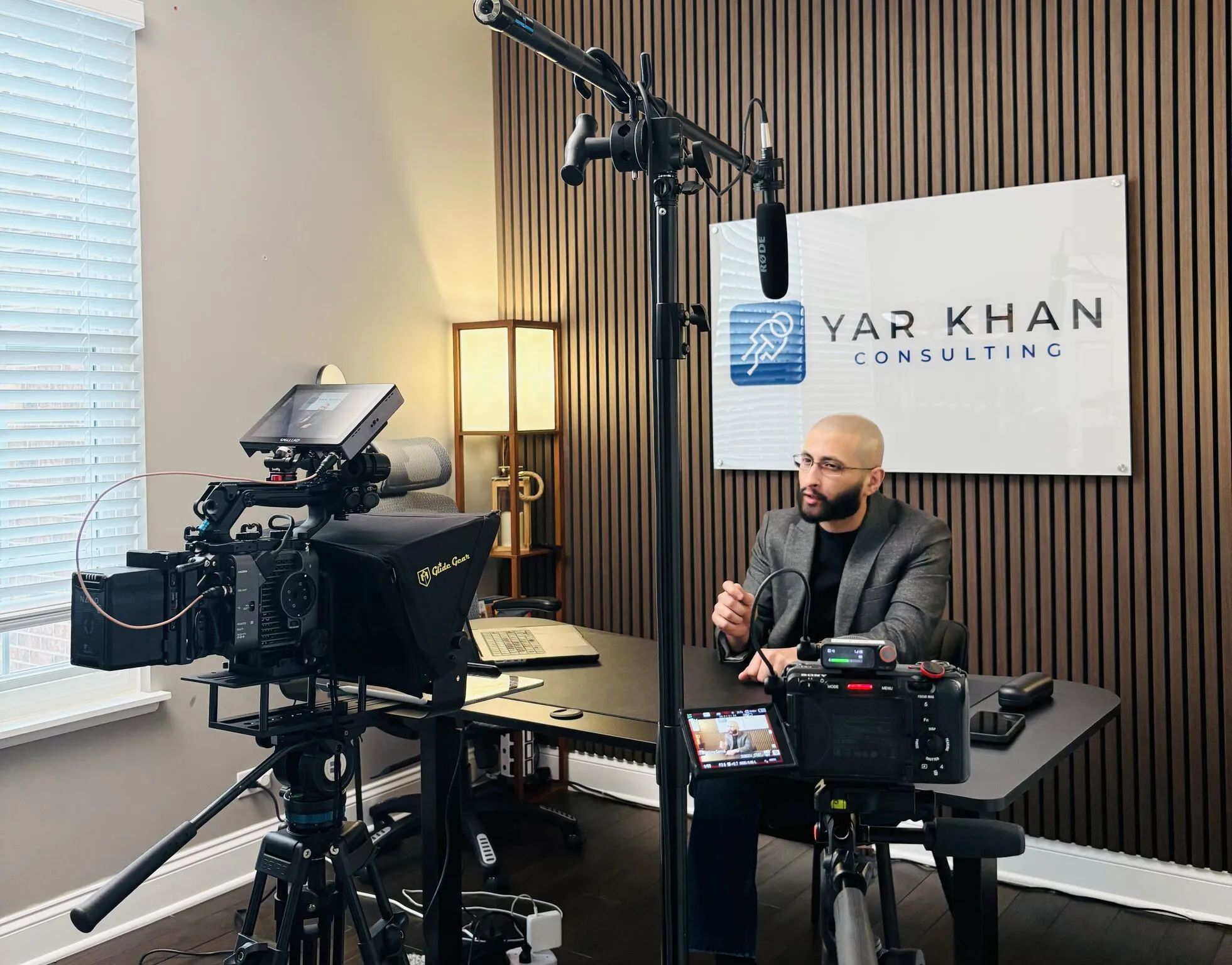
As the accountability structure gets built, gaps sometimes surface where a role needs to be defined or filled. I help identify what the role needs to own and what the right profile looks like, so every hire strengthens the operating structure instead of adding to the founder's load.
What Founders Usually Ask
No. The engagement works across B2B and B2C agency models. The operational failure patterns are consistent regardless of who the agency serves.
No. This is not an EOS implementation. It is a practical operational system built specifically for how online agencies work.
You need at least a distinct sales function and delivery function. The system requires real functional separation to install accountability at the right level.
Yes. When the accountability structure reveals a gap that requires a new role, I help define what that seat needs to own and what the right profile looks like so the hire fits the system being built.
The system is handed off and running. For agencies that want ongoing support beyond the engagement, a monthly advisory option is available.
Weekly calls and coaching sessions with the founder and the current operations lead. Primarily remote with on-site visits built in as needed.
Ready to Install the System Your Growth Needs?
Start with a conversation, or take the assessment to see where your operations stand today.